
The Environmental Regulatory Authority (ERA) has introduced citizen science tools that allow the public to report information about resident and migratory birds in Maldives, as well as white terns in Addu.
The tools were launched at the Seabird Conservation Workshop and Knowledge Sharing Event, organized by the ERA at the Maldives Digital Services hall today.
The event brought together researchers, government agencies and environmental stakeholders to discuss the monitoring and conservation of resident birds across the Maldives, identify priorities for habitat protection and restoration, and share findings from recent studies.
Presentations highlighted the national study of breeding and migratory birds in the Maldives, ongoing bird monitoring work in Gaafu Alifu Hithadhoo, and the findings of a white tern survey conducted in Addu.

Participants also discussed the implementation of existing bird conservation policies, enforcement of relevant laws, ways to strengthen support for wildlife, and priorities for a national bird monitoring programme.
As part of the initiative, the ERA introduced two citizen science tools to collect information with the help of the public.
The first is a form through which people can report sightings of protected and migratory birds in different parts of the Maldives. The second allows residents of Addu to report information about trees used by white terns for nesting and laying eggs.
The ERA said the information would help identify bird habitats and important trees used for nesting, providing valuable data to support conservation efforts.
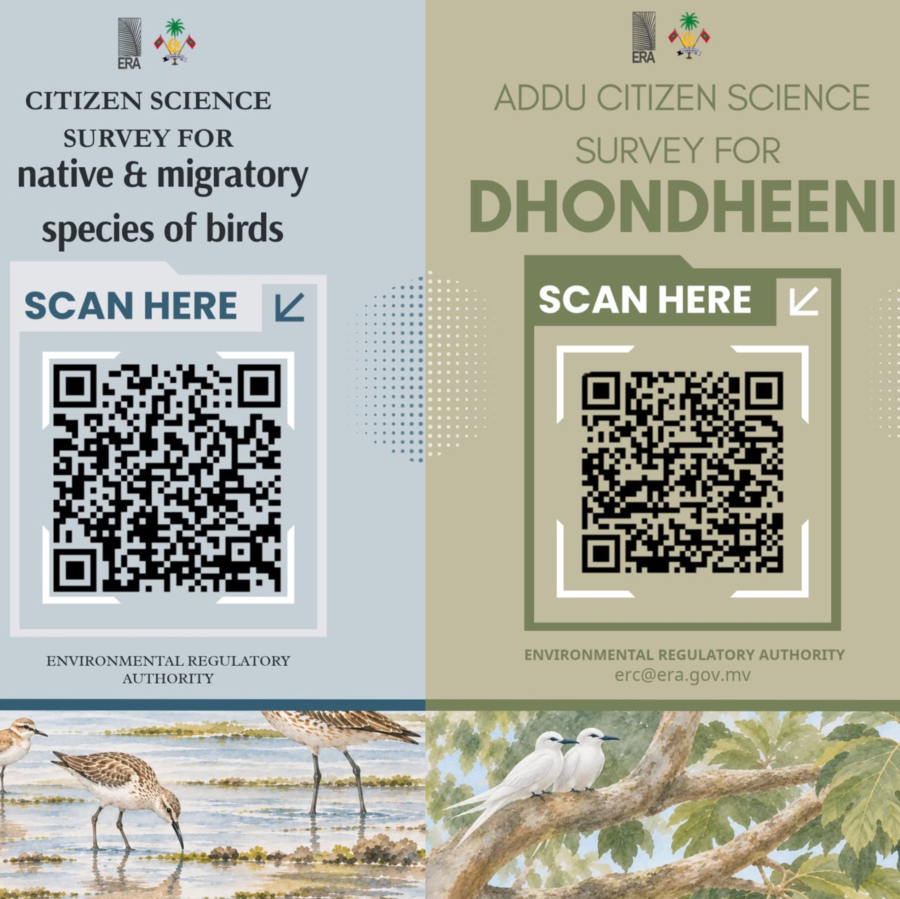
Both tools can be accessed through Survey123, an application used for digital data collection.
Before the workshop began, ERA Chief Executive Hassan Mohamed said the tools were intended to create more opportunities for Maldivian students and researchers to study birds. They would also help survey teams, rangers and environmental officers develop the skills and knowledge needed to strengthen bird conservation efforts, he said.
“As part of the Central Asian Flyway, the Maldives is an important destination for migratory birds to rest, feed and spend time outside their breeding season,” Hassan said.
“By gathering more information from our atolls, we can better understand the behaviour of these birds and the role our islands and atolls play in their long-distance migrations.”
Seabird survey in Gaafu Alifu Hithadhoo
ERA said the main objective of the survey in Gaafu Alifu Hithadhoo, a protected island, was to understand the relationship between the island’s resident bird population, its vegetation and the surrounding marine environment.
The long-term survey has collected data over the past two years.
The island has a 5.4-hectare forest of lhohi trees, containing 344 mature trees. A count of herons arriving on the island at sunset recorded approximately 400 birds in a single photograph.
The survey also scientifically documented, for the first time in the Maldives, different bird species using different parts of the island’s forest.
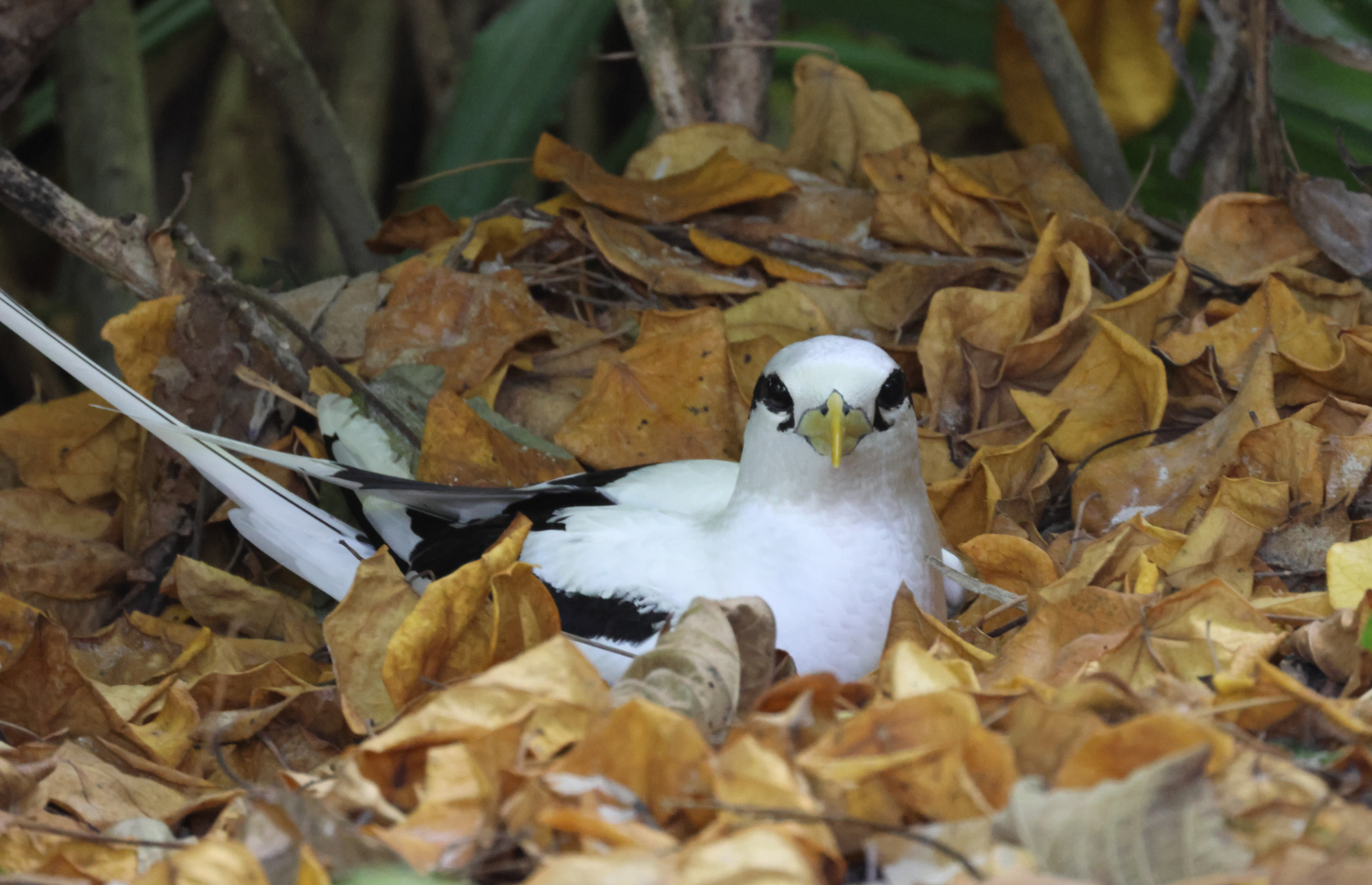
Its findings showed that herons roost in the upper canopy of trees, while White tailed tropic birds (Dhandifulhu Dhooni) lay their eggs in tree cavities and holes.
Status of resident and migratory birds
A report on the status of resident and migratory birds in the Maldives, prepared for the ERA by the University of Auckland and Isles Consulting Private Limited with financial support from the Ocean Country Partnership Programme (OCPP), was published last year.
The report was based on interviews with 42 people from across the atolls, particularly fishermen, and covered 29 species of protected birds out of a total of 207.
It identified island development, tree felling, sand extraction, egg collection and the capture of birds for keeping as pets among the main threats to bird populations.
The report also recorded a decline in the number of resident birds being sighted in different parts of the Maldives and a reduction in their populations.
White tern survey in Addu
White terns have been recorded breeding in the Maldives only in Addu and Huvadhoo.
According to the ERA's survey, sightings of white terns in Addu increased in 2025 compared with 2013. The highest number was recorded in Feydhoo, where 210 birds were sighted. In Maradhoo, however, the number fell from 39 to four.
In Addu, white terns most commonly nest in mango and banana trees. Tree felling for development projects and crows killing young white terns are among the major threats to the species.
The ERA said Addu residents can now use Survey123 to share information about trees and areas where white terns are sighted.
The authority is also working with the University of Auckland on further research, including bird-ringing and the use of devices to record bird calls at night.
ERA said it also planned to develop a standardized approach to monitoring birds at national level.


